

When implementing a CMM, it is important to consider not only the machine price, but also the total cost before and after installation. CMM cost can vary widely depending on the system type, measuring range, accuracy requirements, automation level, software, installation environment, and operator training needs. This guide explains typical CMM machine price ranges by type and the hidden costs buyers should include when planning a realistic budget.
The price of a CMM depends largely on the machine type and application. A small shop-floor inspection system, portable arm, bridge CMM, and large gantry system all fall into very different budget ranges. The following table provides general market reference ranges for estimating CMM cost. Actual pricing may vary by configuration, accuracy grade, measuring volume, software package, probes, service contract, region, and supplier quotation.
| CMM Type | Typical Price Range | Best Suited For |
|---|---|---|
| Handheld CMM, such as the KEYENCE XM/WM Series | Contact manufacturer | Shop-floor measurement, small to large workpieces, quick inspection, and reducing measurement-room bottlenecks |
| Portable Arm CMM, such as FARO arm-type systems | $50,000–$150,000 | On-site inspection, reverse engineering, and medium-size parts that are difficult to move |
| Benchtop / Compact Bridge CMM | $50,000–$120,000 | Small parts, laboratory inspection, and compact quality-control spaces |
| Standard Bridge CMM | $80,000–$300,000+ | High-accuracy dimensional inspection, GD&T measurement, and repeatable quality assurance |
| Gantry CMM | $200,000–$500,000+ | Large aerospace, automotive, heavy machinery, and oversized workpieces |
| Laser Tracker | $100,000–$250,000+ | Large-scale alignment, tooling inspection, and long-range measurement |
In general, CMM machine cost increases with measuring range, accuracy, automation level, and software capability. A standard bridge CMM can provide excellent repeatability in a controlled environment, but it often requires dedicated space, careful part handling, and skilled programming. Portable and handheld systems offer more flexibility because they can be brought to the workpiece instead of moving the part to a measurement room.
For handheld CMMs such as the KEYENCE XM Series and WM Series, public list pricing is not typically displayed, so buyers should contact the manufacturer for a quotation. However, the initial machine price should not be the only comparison point. Handheld systems may reduce upfront investment because they do not require a dedicated temperature-controlled inspection room, which can otherwise add approximately $20,000–$50,000 to the implementation budget for a stationary CMM. The XM Series is suited for small to medium-size workpieces with a measuring range up to 2 m, while the WM Series supports large workpieces up to 25 m and combines contact probing with laser scanning capability.
When buyers ask “how much does a CMM cost?”, the sticker price is only part of the answer. A realistic budget should be based on the five-year total cost of ownership (TCO), including equipment, installation environment, calibration, software, training, maintenance, and the productivity impact of the measurement workflow.
The first cost is the machine itself, but stationary CMMs often require additional investment before they can be used effectively. A bridge CMM may need a dedicated measurement room, vibration control, stable flooring, part-loading equipment, and climate control. In many facilities, building or upgrading a temperature-controlled metrology room can add approximately $20,000–$50,000 to the initial project cost.
Portable and handheld CMMs can reduce this part of the budget because they are designed for shop-floor or on-site measurement. Handheld systems such as the KEYENCE XM Series and WM Series can be used near the production area, helping reduce the need to move every part into a dedicated inspection room. This can make the total initial investment lower than a bridge CMM installation, even when the equipment quote must be requested from the manufacturer.
After installation, CMM owners should budget for recurring costs. Annual calibration commonly adds about $2,000–$5,000 per year, depending on the machine type, service provider, and traceability requirements. Software licenses, updates, and maintenance contracts may add another $3,000–$10,000 per year. Probes, styluses, fixtures, calibration artifacts, and other consumables should also be included in the annual budget.
Stationary CMMs may also carry ongoing environmental costs, including air conditioning, humidity control, clean-room maintenance, and electricity for the measurement room. Over five years, these costs can make a mid-range bridge CMM substantially more expensive than the purchase price alone suggests.
Operator training is one of the most commonly overlooked costs. A full bridge CMM often requires a dedicated metrologist or highly trained CMM programmer. In the U.S. market, a specialized CMM operator or programmer may represent roughly $60,000–$80,000 per year in labor cost, depending on experience, region, and responsibility level. Training time, certification, and variation between operators should also be considered.
Handheld CMMs can help reduce this burden when they are designed for intuitive operation. KEYENCE positions its handheld CMMs as systems that can be used with minimal training, similar to familiar hand tools, while still supporting 3D and GD&T measurement. This can make inspection easier to distribute across production teams instead of relying only on a measurement-room specialist.
Downtime is another major TCO factor. When parts must be moved to the metrology room, queued for inspection, and returned to the line, the real cost can exceed the inspection labor itself. A handheld CMM can support quick in-process checks, large-part inspection, and shop-floor troubleshooting alongside a stationary CMM, helping reduce inspection-room bottlenecks and downtime-related costs.
For many manufacturers, the main takeaway is that handheld CMMs may reduce not only initial facility costs, but also labor, training, floor space, and production-flow costs. Over a five-year TCO comparison, the difference often becomes clearer in running costs than in the initial quote.
The right CMM should be selected based on both budget and application. Buyers should compare not only CMM price, but also part size, required accuracy, inspection frequency, operator skill level, and whether measurement must be performed in a lab or on the shop floor.
If the budget is under $50,000, a handheld-type system such as the KEYENCE XM Series may be a practical option, especially when the goal is to control total cost by avoiding a dedicated temperature-controlled room. This range is suitable for companies that need fast 3D inspection of small to medium-size workpieces without building a full metrology lab.
With a budget of $50,000–$150,000, buyers often compare portable arm CMMs with higher-end handheld systems, including options such as the KEYENCE WM Series. The best choice depends on workpiece size, measurement location, and whether contact measurement, scanning, or both are required.
With a budget above $150,000, a full bridge CMM becomes a strong option for high-accuracy laboratory inspection. However, if the facility also needs in-process inspection, large-part measurement, or faster shop-floor checks, combining a bridge CMM with a handheld CMM may provide a better balance. The bridge CMM can handle final certification and tight-tolerance inspection, while the handheld system helps reduce measurement-room bottlenecks and improve production responsiveness.
Before making a final decision, compare CMM types by price, accuracy, portability, required environment, operator skill, and long-term ownership cost.
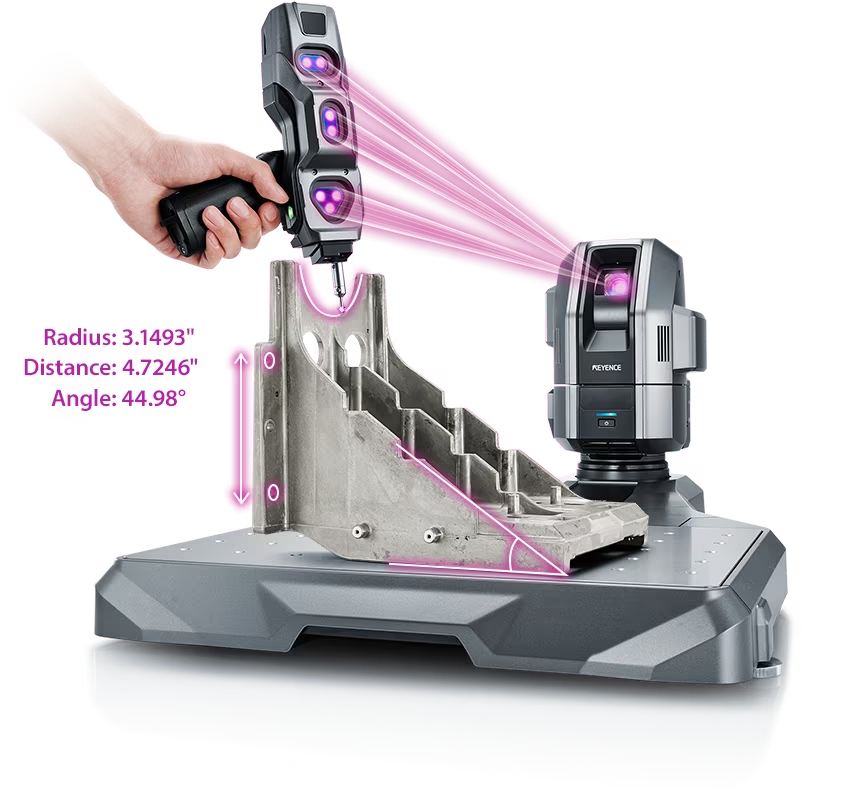
Source: KEYENCE Website(https://www.keyence.com/products/measure-sys/cmm/xm/index_pr.jsp)
This CMM has a caliper-like feel, enabling even beginners to perform high-precision measurements. It can be carried without the need for temperature control, allowing for immediate measurements at any desired location and time. As it doesn't require a large installation space, it's a CMM with a low entry barrier.
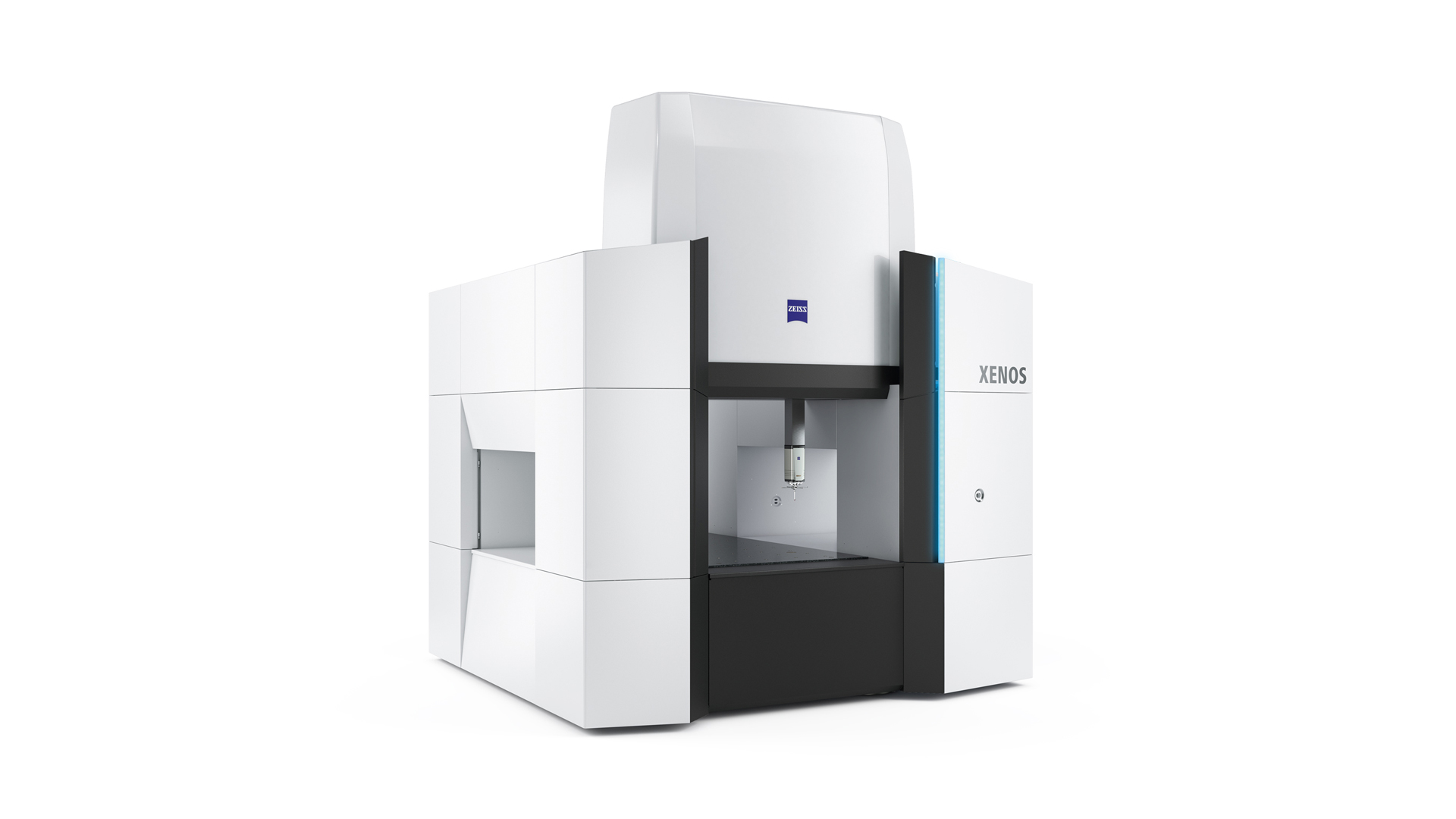
Source: Carl Zeiss Website(https://www.zeiss.com/metrology/products/systems/cmm.html)
Utilizing linear drive on all axes, this CMM boasts high precision with a maximum permissible length measurement error of 0.3+L/1000μm, repeatability of ±0.2μm, and resolution of 0.001μm. The reduced occurrence of errors allows for a decrease in the need for remeasurement.
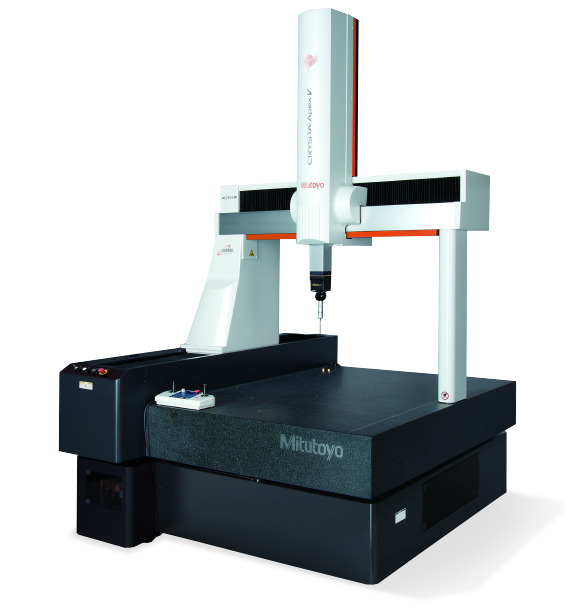
Source: Mitutoyo Website(https://www.mitutoyo.com/products/coordinate-measuring-machines/)
A CNC CMM that was first developed in 1976.
It features applications that respond to the demand for "Smart Factories" by allowing monitoring of operational status and maintenance management of the machine through the network.
Reasons for Selection